

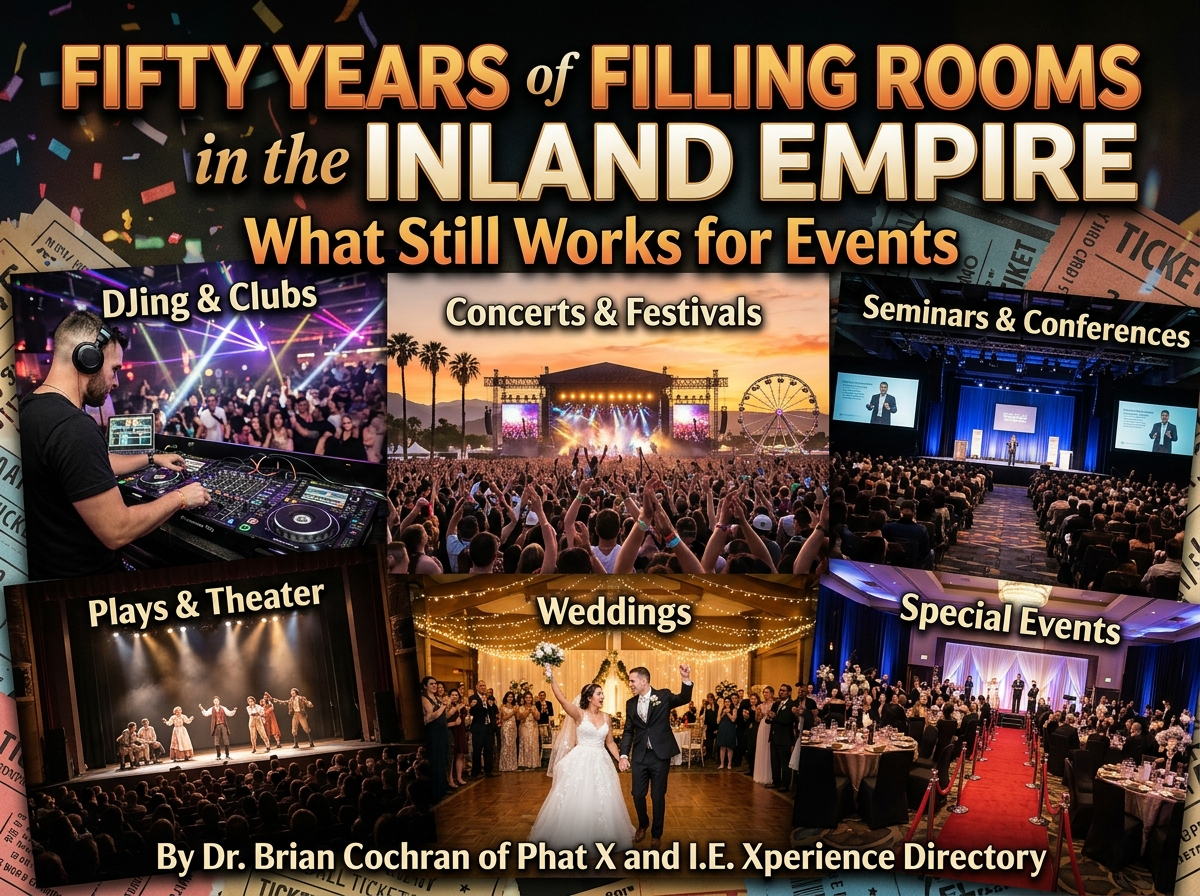
Fifty Years of Filling Rooms in the Inland Empire: What Still Works for Events
I have been producing events in the Inland Empire since 1975. That is long enough to watch venues open and close, music styles cycle, and the way people find out about a show change several times over. Some things that filled rooms in the 1970s and 1980s still fill them. Other things that used to be reliable no longer are.
The core has stayed consistent. People still show up for artists and experiences they already know and trust, especially when the price feels fair and the location is easy to reach. Old-school R&B, classic soul, and tribute shows continue to draw because the audience already has the songs in their heads. They do not need a long explanation. They need a clear date, a clear room, and a ticket that does not add surprise fees at the end. That is why low, transparent ticket pricing matters more now than it did when the only options were the box office or a phone order.
Promotion has changed more than the music. In the 1970s and 1980s you could still count on radio, newspaper ads, and flyers posted at record stores and barbershops. Those channels still exist in reduced form, but most of the decision now happens on phones. A clean event page, a shareable link, and a calendar people can actually search have become as important as the poster on the wall. The Inland Empire is large. People live in different cities and do not all pass the same bulletin boards. A single, reliable place to see what is happening across the region reduces the chance that a good show stays invisible.
Venues have also shifted. Some of the classic rooms are gone. Newer spaces and multi-purpose centers have taken their place. The practical requirements have not changed: adequate parking or clear directions, a stage that works for the production, and a layout that lets people see and hear. What has changed is the expectation that tickets can be bought online without friction and that the event will appear on more than one calendar. When those pieces are missing, even a strong lineup underperforms.
Community events follow similar rules. Church groups, car clubs, cultural organizations, and local festivals still succeed when they make it easy for their existing audience to invite the next person. A simple registration or ticket link, a clear time, and one public share do more than a complicated campaign. The first twenty-five or so complete events each month that meet basic listing standards tend to get more visibility simply because they are finished and findable.
Ticket pricing is one area where the Inland Empire can still compete. National platforms have added layers of fees that make a $40 ticket feel like $50 or more by the time the buyer finishes. Keeping the service fee low, or eliminating it during launch windows, removes one reason people hesitate. The remaining cost is usually just card processing. When the total is predictable, more people buy earlier instead of waiting to see if the show sells out or gets discounted.
None of this replaces the work of putting on a good show. Sound, lighting, timing, and hospitality still decide whether people leave happy and tell someone else. Those details have not become less important. They have become more important because audiences have more choices and shorter attention spans. The rooms that stay full are usually the ones that handle the basics cleanly and then deliver the experience people came for.
Looking ahead, the combination that still works is straightforward: an artist or concept the audience already wants, a venue that is easy to reach, a ticket that does not surprise them with fees, and a listing that is easy to find and share. The Inland Empire has the audiences. It has the rooms. What it has sometimes lacked is a single, local place that makes the rest of the process simple for both the producer and the person buying the ticket.
That is the practical lesson from fifty years of filling rooms. The music and the crowds change. The need for clear information, fair pricing, and reliable promotion does not.
Events can be listed free on the I.E. Xperience calendar. Paid tickets can be sold with only standard card processing during the current launch window. Details are at iex.directory. Producers who want to talk through a date can reach tickets@iex.directory or call +1 (951) 987-5145.
The rooms are still there. The audiences are still there. Making it easy for them to find each other remains the part that has not gone out of style.
I.E. Xperience | Inland Empire Entertainment Directory | iex.directory